Tagum
From the Wiki, the cited reference
Tagum, officially the City of Tagum (Cebuano: Dakbayan sa Tagum; Filipino: Lungsod ng Tagum), is a component city and capital of the Davao del Norte, Philippines.
Tagum, officially the City of Tagum (Cebuano: Dakbayan sa Tagum; Filipino: Lungsod ng Tagum), is a component city and capital of the Davao del Norte, Philippines. According to the 2024 census, it has a population of 300,042, making it the most populous component city in Mindanao and in Davao del Norte, as well as the second most populous in Davao Region after Davao City. It is one of the topmost livable cities in the Philippines, and was one of the finalists in the most child-friendly city in the Philippines – component category along with Laoag, and Talisay, Cebu.[1]
Etymology
Tagum is a color word from Cebuano that means Indigo. There's also a theory although it's not a supported, that in Kalagans tagyum (or variants tayum, tagung-tagung) refers to the indigo plant (Indigofera tinctoria Linn.). On the one hand, a legend explains how the name Magugpo, the city's former name, came about.[1]
History
The area of Tagum was inhabited by Mandaya, Maguindanaon and Kagan. By the mid-1800s it was a part and serves as a vassal of Sultanate of Maguindanao and was ruled by the Maguindanaon Datu Bago, which spanned the entire Davao Gulf region and had its capital in what is now Davao City known as Pinagurasan. When the Spanish arrived with soldiers and settlers led by Don Jose Cruz de Uyanguren to take the settlement in 1848, Datu Bago and his warriors resisted for three months until he finally saw the hopelessness of his cause and abandoned the settlement, which the Spanish took soon thereafter and established a town out of it giving it the name Nueva Vergara, which was renamed Davao in 1867.[1]
Rise to townhood
The Spanish authorities left the district of Davao at the aftermath of the Philippine Revolution, and the Americans took over. American prospectors then arrived and set up several plantations at Busaon, Bincungan and Hijo in 1906 and onwards. Tagum became a municipal district of Davao in March 10, 1917, with the passage of Act No.[1]
Contemporary history
The local government of Magugpo was formalized with the holding of the first local election in 1947. Suaybaguio retained his position, gaining a new Vice Mayor in the person of Lucio Berdida.[1]
Cityhood
The 1990s have been significant years not only for Tagum, but for the entire Philippine Government bureaucracy. There was a radical change in the system of government through the passage of Republic Act 7160 otherwise known as the Local Government Code of 1991. By virtue of the said Republic Act, decentralization had taken off.[1]
Geography
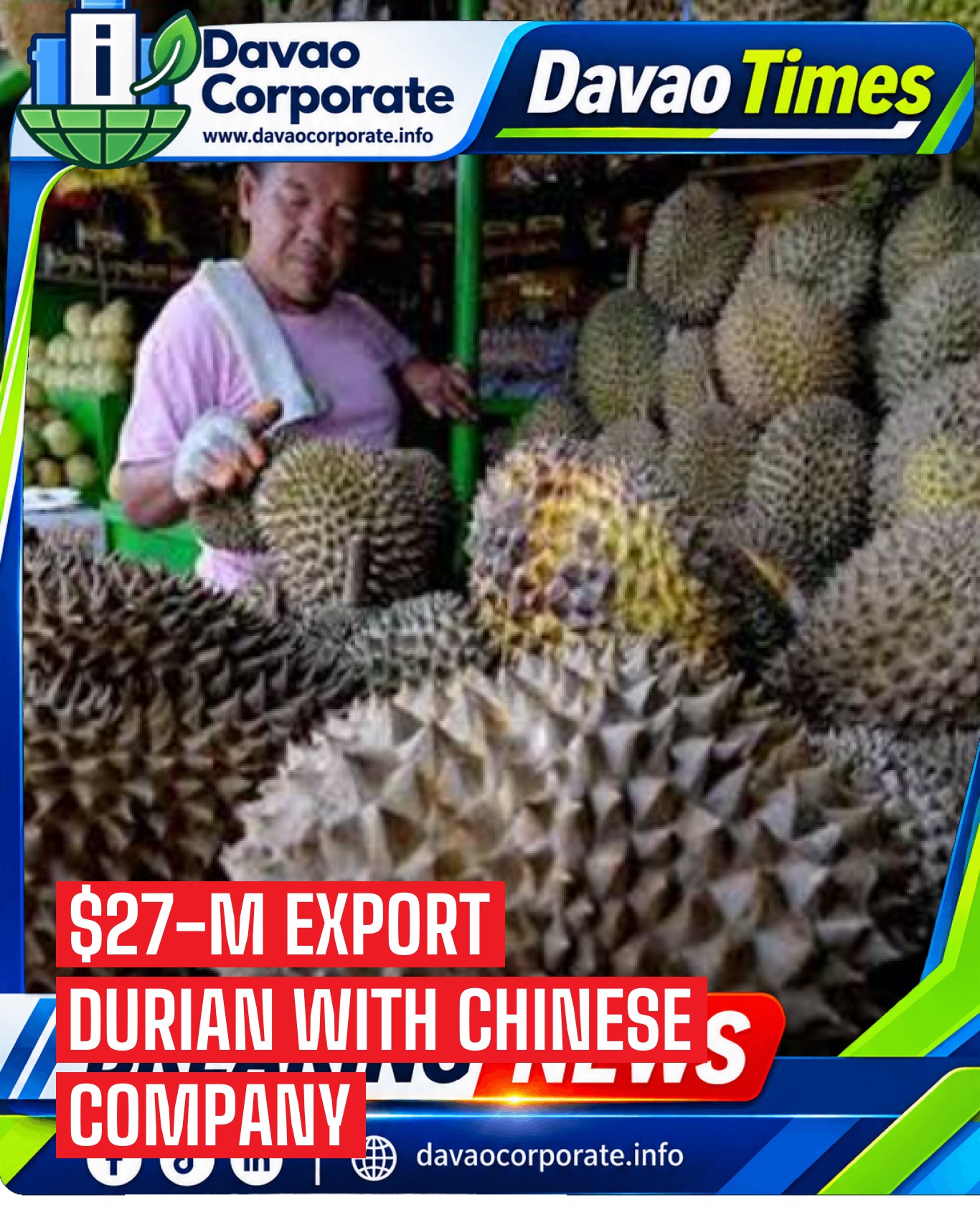
Tagum has a total land area of 19,580 hectares (48,400 acres), which is predominantly agricultural, and produces various kinds of crops like coconut, rice, Cavendish banana, fruit trees like durian, lanzones and other agricultural crops for non-commercial use.[1]
Climate
Tagum has a tropical rainforest climate (type Af) under the Köppen climate classification system. The city enjoys weather that remains balmy all year round. It is characterized by a uniform distribution of rainfall, temperature, humidity, and air pressure.[1]
Barangays
Tagum is politically subdivided into 23 barangays. Each barangay consists of puroks while some have sitios.[1]
Economy
Tagum, from being a predominantly agricultural area, has become Mindanao's fastest-growing urban city due to its strategic location, being in the crossroads between the rural areas of Davao del Norte and Davao de Oro and the urban Metro Davao. Blessed with a developed infrastructure, the city manages to export goods like wood chips, veneer plywood, and wood lumber. Fresh bananas, however, remain as the chief export product.[1]
Images


See also
References
- ↑ a b c d e f g h i j “Tagum”. Wikipedia. Text adapted from Wikipedia under CC BY-SA 4.0. Rewrite it in your own words where you can. Encyclopedia Retrieved 2026-11-14
Further reading
- “www.tagumcity.gov.ph / about_tagum.html”. tagumcity.gov.ph. Link found on the Wikipedia page. Open it, check it and fix this title before relying on it. Government Retrieved 2026-11-14
- “www.tagumcity.gov.ph / about_lgu.html”. tagumcity.gov.ph. Link found on the Wikipedia page. Open it, check it and fix this title before relying on it. Government Retrieved 2026-11-14
- “lawph.com / statutes/ra1102-fixing-the-boundary-between-dona-alicia-and-compostela,-davao.html”. lawph.com. Link found on the Wikipedia page. Open it, check it and fix this title before relying on it. Web page Retrieved 2026-11-14
- “www.blgs.gov.ph / lgpmsv2/cmshome/index.php”. blgs.gov.ph. Link found on the Wikipedia page. Open it, check it and fix this title before relying on it. Government Retrieved 2026-11-14
- “www.tagumcity.gov.ph / news.php”. tagumcity.gov.ph. Link found on the Wikipedia page. Open it, check it and fix this title before relying on it. Government Retrieved 2026-11-14
- “ph.news.yahoo.com / tagaytay-most-child-friendly-city-164933558.html”. ph.news.yahoo.com. Link found on the Wikipedia page. Open it, check it and fix this title before relying on it. News Retrieved 2026-11-14
Related articles


Explore related pages
Make it happen
Follow Davao Corporate
Davao Corporate · Blogs & Guests, Wiki and more
Our Facebook page and TikTok cover the blog, the Wiki and everything else on the site. Follow to stay in the loop.